1. Foundry Evolution: The Fully Custom Tensor G5
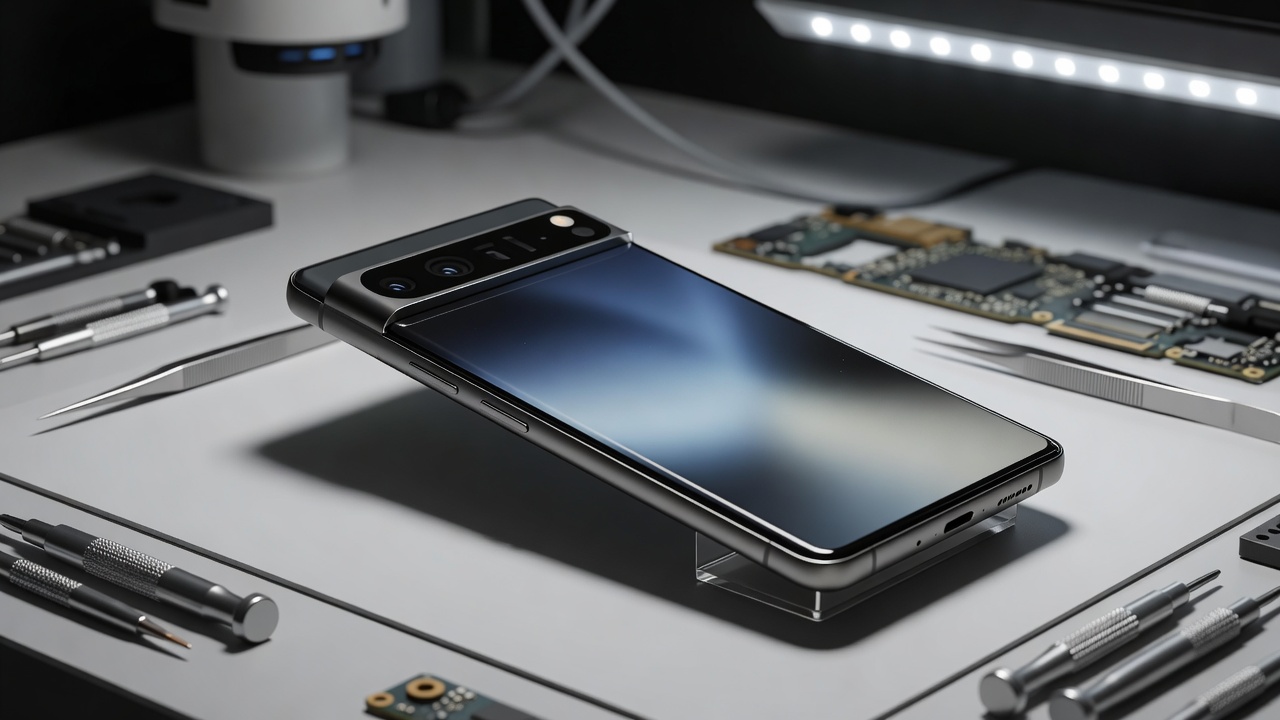
The Google Pixel 10 marks a defining inflection point for Google Silicon: the total severance from third-party base designs in favor of an entirely custom RTL taped out at TSMC. The Tensor G5 is produced on the cutting-edge 3nm node, eliminating the parasitic package impedance and thermal density liabilities that constrained previous Tensor generations.
The core topology features a monolithic high-performance Cortex-X core clocked at 3.35 GHz, backed by five middle-performance cores and two high-efficiency cores. This configuration is governed directly by Google's customized Energy Aware Scheduler (EAS), which assigns background Linux threads to low-power caches without waking high-power vector registers.
2. Edge Tensor Processing Unit (TPU) Deep Dive
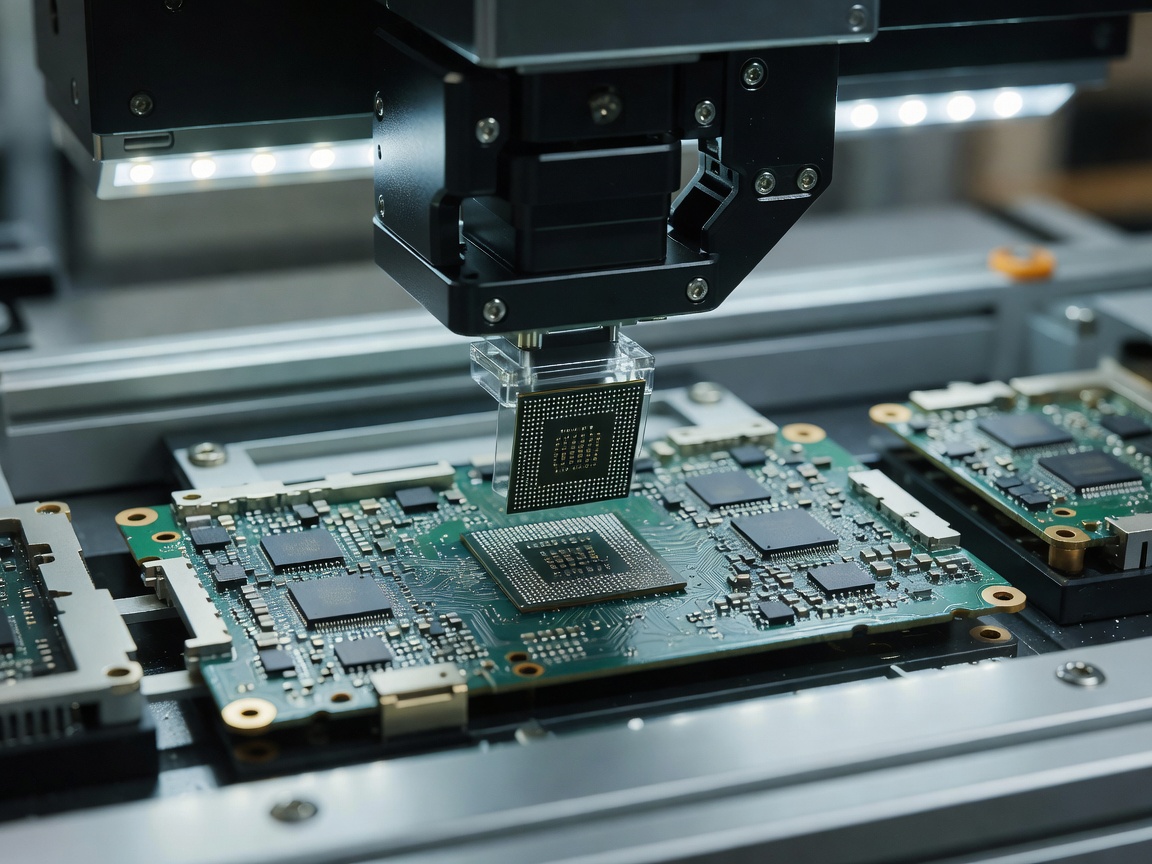
Google’s silicon differentiation lives inside its hardware TPU. The 2026 revision delivers 48 Tera-Operations Per Second (TOPS) across INT4 quantization regimes. Rather than routing voice transcription, text summarization, and computational photo semantic segmentation to remote data centers, the Pixel 10 resolves these matrix transformations entirely on-device within a sub-1.8W power budget.
Real-world memory bandwidth reaches 68 GB/s via tight LPDDR5X interconnects, allowing continuous streaming of 8K multi-frame HDR video data through the ISP and TPU concurrently, producing night sight video with clean shadows and reduced temporal grain.
3. Actua Display: Colorimetric Fidelity
The 6.4-inch Actua OLED panel prioritizes colorimetric accuracy over hyper-saturated gamut exaggeration. It sustains a Delta E of less than 0.9 across the DCI-P3 color space, establishing it as an authoritative reference screen for mobile creative grading.
With an instantaneous peak brightness of 3,000 nits and sustained high-brightness mode (HBM) hitting 1,850 nits across 100% APL, daylight legibility is exceptional. Touch response sampling locks to 240 Hz, maintaining low latency throughout gesture interactions.
4. Camera Hardware and Algorithmic Merging
The imaging cluster features a customized 50-megapixel primary sensor with an f/1.68 aperture, supported by omnidirectional Octa-Phase Detection autofocus. A secondary 48-megapixel ultra-wide sensor doubles as a high-magnification macro engine capable of resolving microscopic thread count at a 2cm focal distance.
Rather than compounding digital noise through conventional digital zoom, Google leverages its spatial diffusion model embedded in the silicon cache to reconstruct fine edge contours up to 8x digital crop with optical-like clarity.
5. Pros and Cons Matrix
Architectural Advantages
- Unrivaled on-device machine intelligence latency via 48 TOPS TPU.
- Pure Android 16 implementation with day-one security releases.
- TSMC 3nm manufacturing drastically stabilizes thermal throttling.
- Industry-standard photographic dynamic range and color consistency.
Architectural Compromises
- Peak raw 3D GPU gaming clocks fall 15% behind Adreno 830 flagship rivals.
- 45W charging ceiling requires 62 minutes for full cell saturation.
- No specialized bypass gaming charging or ultrasonic shoulder triggers.
6. Telemetry Verdict and Engineering Summary
The Google Pixel 10 trades brute GPU polygon throughput for real-time edge intelligence and computational optics supremacy. For enterprise users and imaging enthusiasts who require prompt Android kernel updates and zero bloatware overhead, it remains the gold standard in clean architecture.